Latest Work
Tags
Role
Product Designer
Status
Released
Timeline
Q1 2024 - Q2 2024
Product or Platform
Shopee
Supporting Seabank’s B2B positive Expansion
How we are supporting USD 1x million to USD 4x million business expansion
Now imagine, last quarter you launched a product and it's a big success. At the peak point, it's stagnant because the loan flow is too linear, causing a bottleneck in approval, and upscaling requires more people. We were thinking it's a banking sector that should be linear and cautious. Like the common B2B product, the name itself, Supply Chain Financing, gives a feel of complexity.
So, what is Supply Chain Financing?
So Supply Chain Financing involves a third-party financial institution (like a bank) providing financing to either the buyer or the supplier, allowing for early payment or extended payment terms, which is used to improve the working capital and liquidity of businesses involved in a supply chain.
Let see this illustration
Principal | Supplier | Finance company |
|---|---|---|
SMart | PT Creative Goods | Bank One |
Imagine "SMart," a large retailer, needs to pay its smaller supplier, "PT Creative Goods," $100,000 for a shipment. SMart's policy is to pay in 90 days to manage its own cash flow, but this long wait puts a financial strain on PT Creative Goods, who needs money now to cover its operational costs. This is where Supply Chain Financing (SCF) provides a perfect solution, initiated by MegaMart to support its valued supplier.
SMart approves Creative Goods' $100,000 invoice, essentially guaranteeing to a finance company that the payment is legitimate and will be paid in 90 days. Based on SMart's strong credit, the finance company immediately offers to pay PT Creative Goods upfront, for example, $99,000. PT Creative Goods happily accepts the immediate cash, and the finance company earns a small fee. When the 90 days are up, SMart pays the full $100,000 directly to the finance company, fulfilling its original payment term. This way, PT Creative Goods gets paid quickly, SMart keeps its extended payment terms, and the entire supply chain remains financially healthy.
What is the core problem?
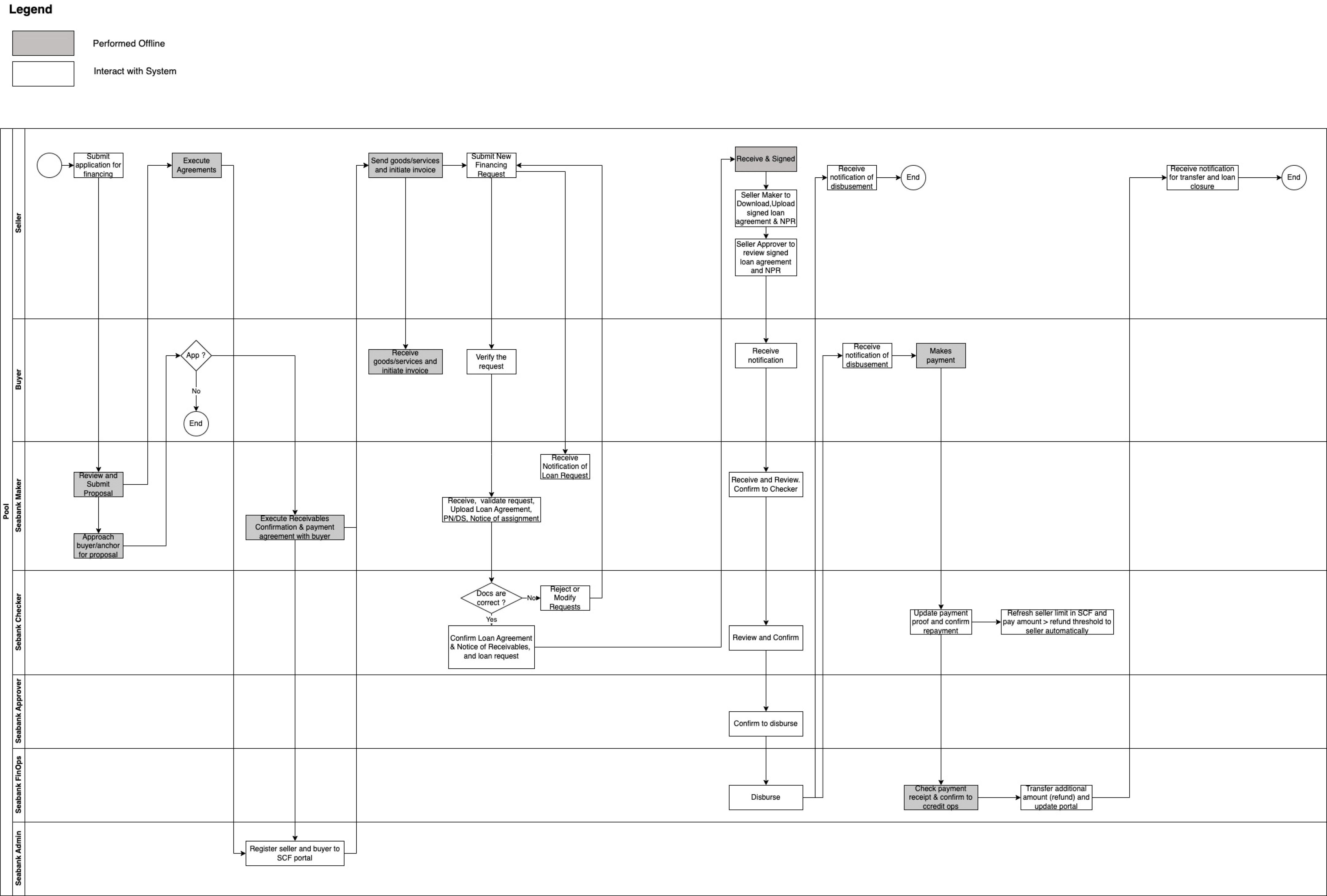
The core problem is multi-layered approval and too dependent in specific role. Let' see this illustration.
Previously

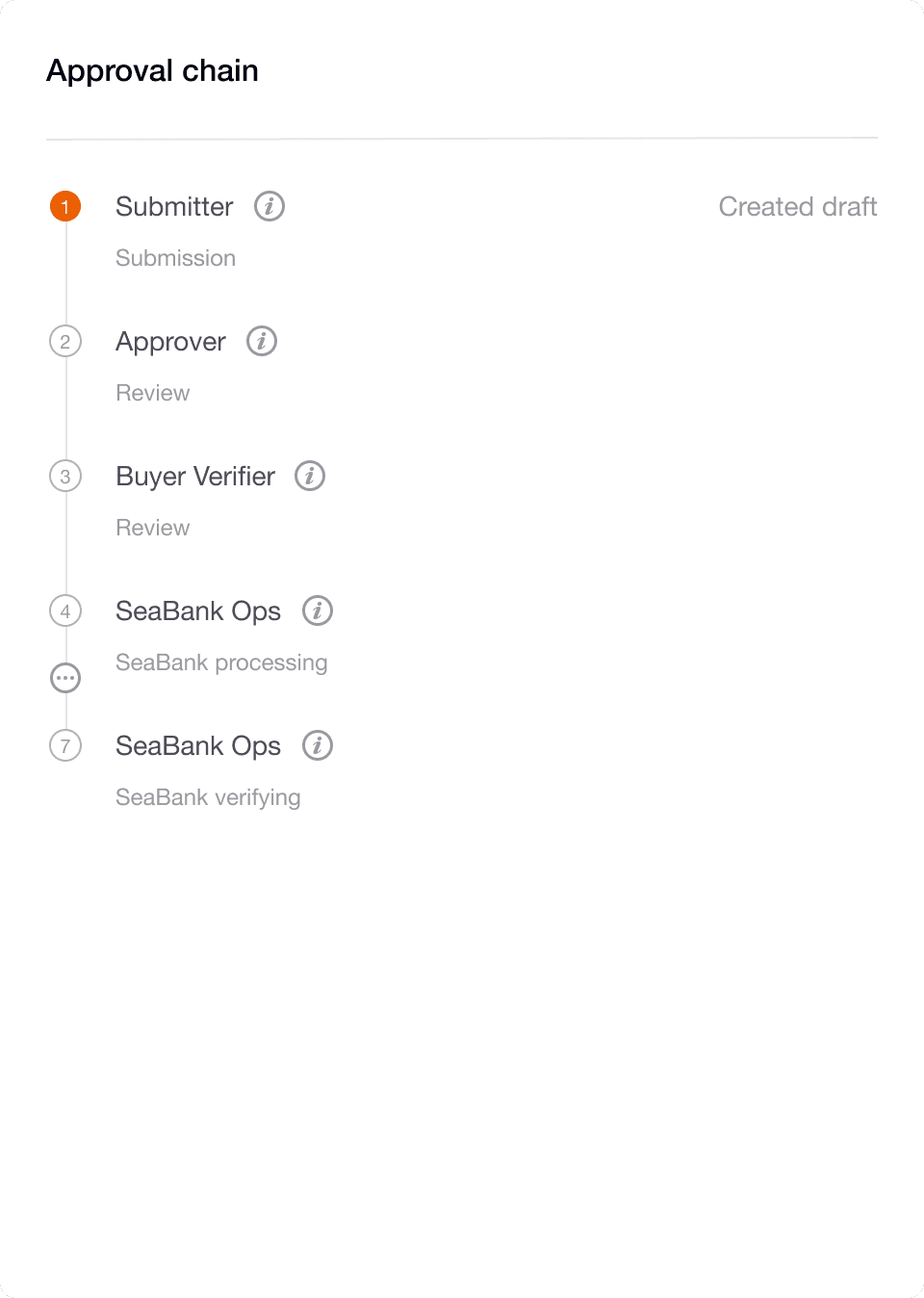
So every role has a rigid capabilities that limit their permission also the Approval Chain is multi-layered adding an addition complexity, as I mention before.
Our solutions?
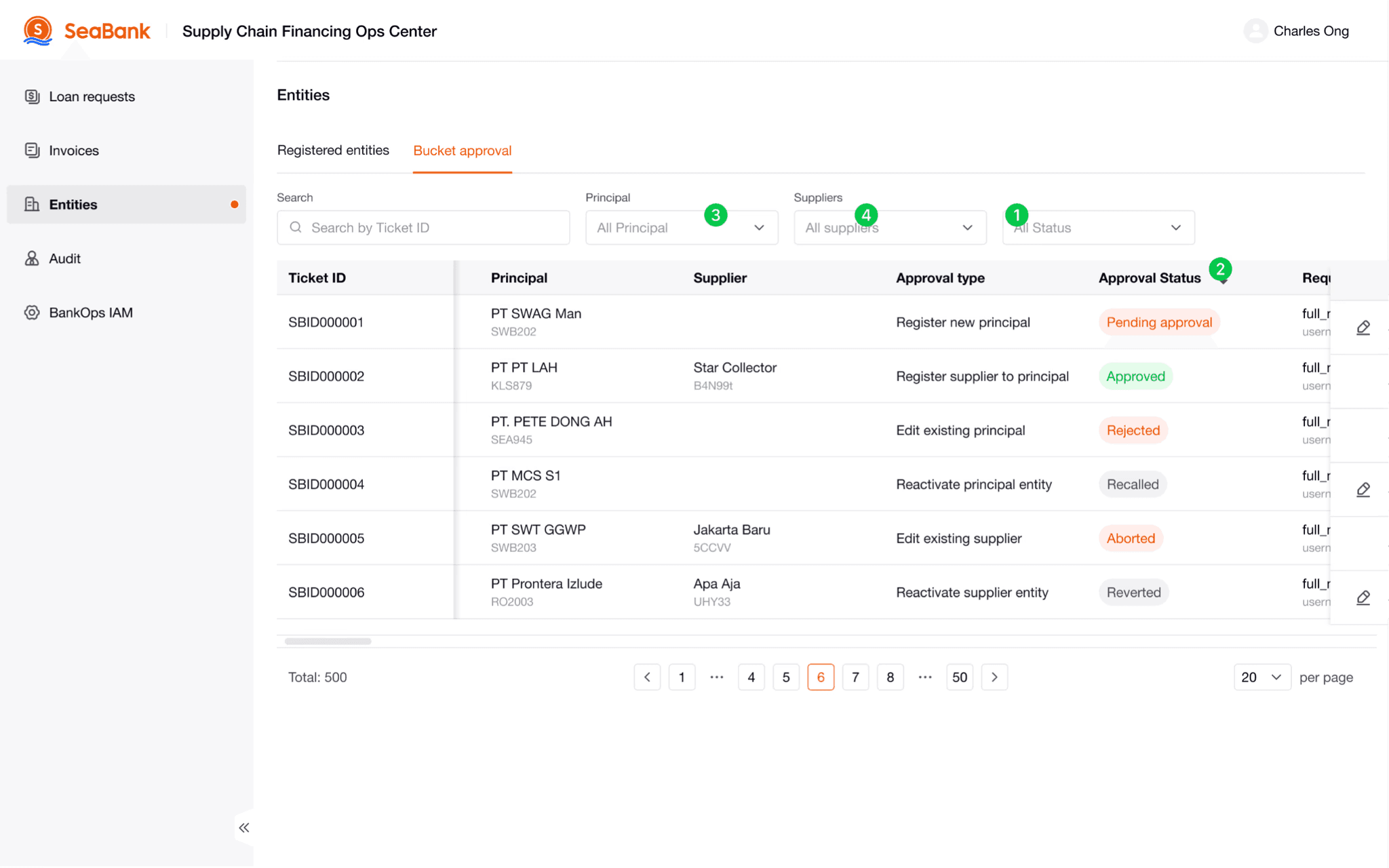
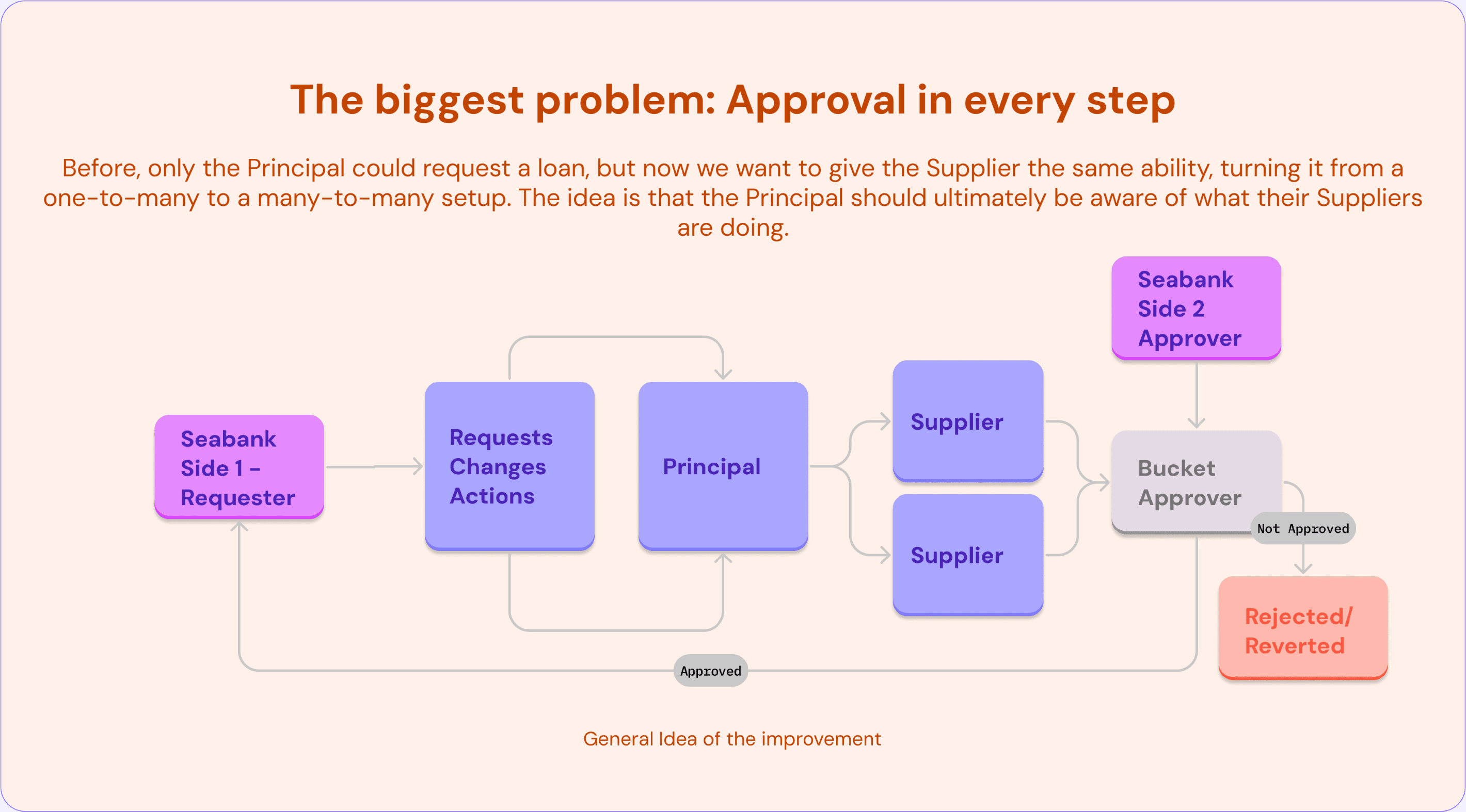
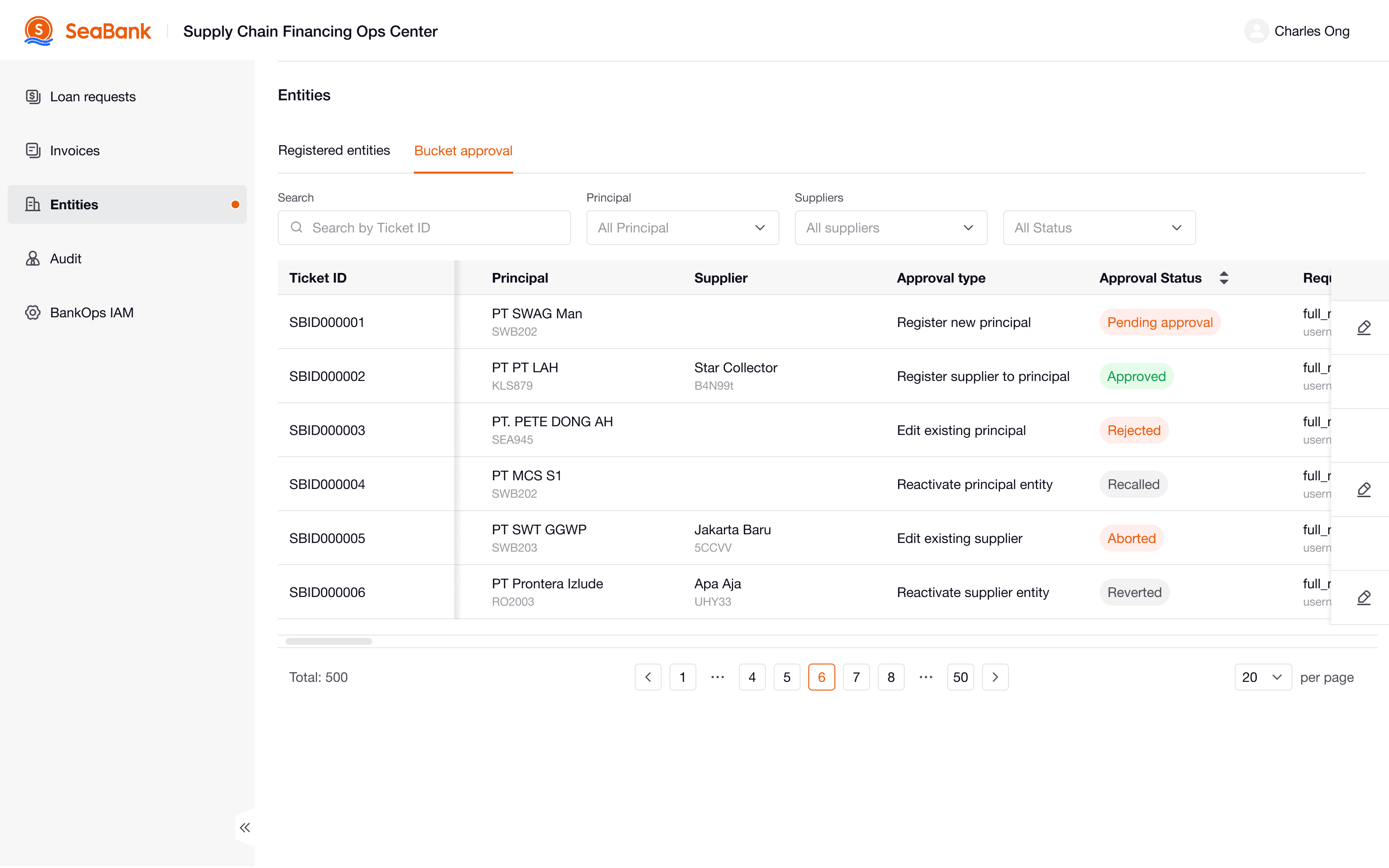
Before, only the Principal could request a loan, but now we want to give the Supplier the same ability, turning it from a one-to-many to a many-to-many setup. The idea is that the Principal should ultimately be aware of what their Suppliers are doing. So we also a place where every request is there, we call it Bucket Approval.
Sounds good?
Of course, we've managed to increase productivity dramatically; the latest data shows it has grown to six to seven times the initial value, which has been fantastic for our overall output. But there is an implication we're now grappling with.
Previously, our flow just like this:
To this…
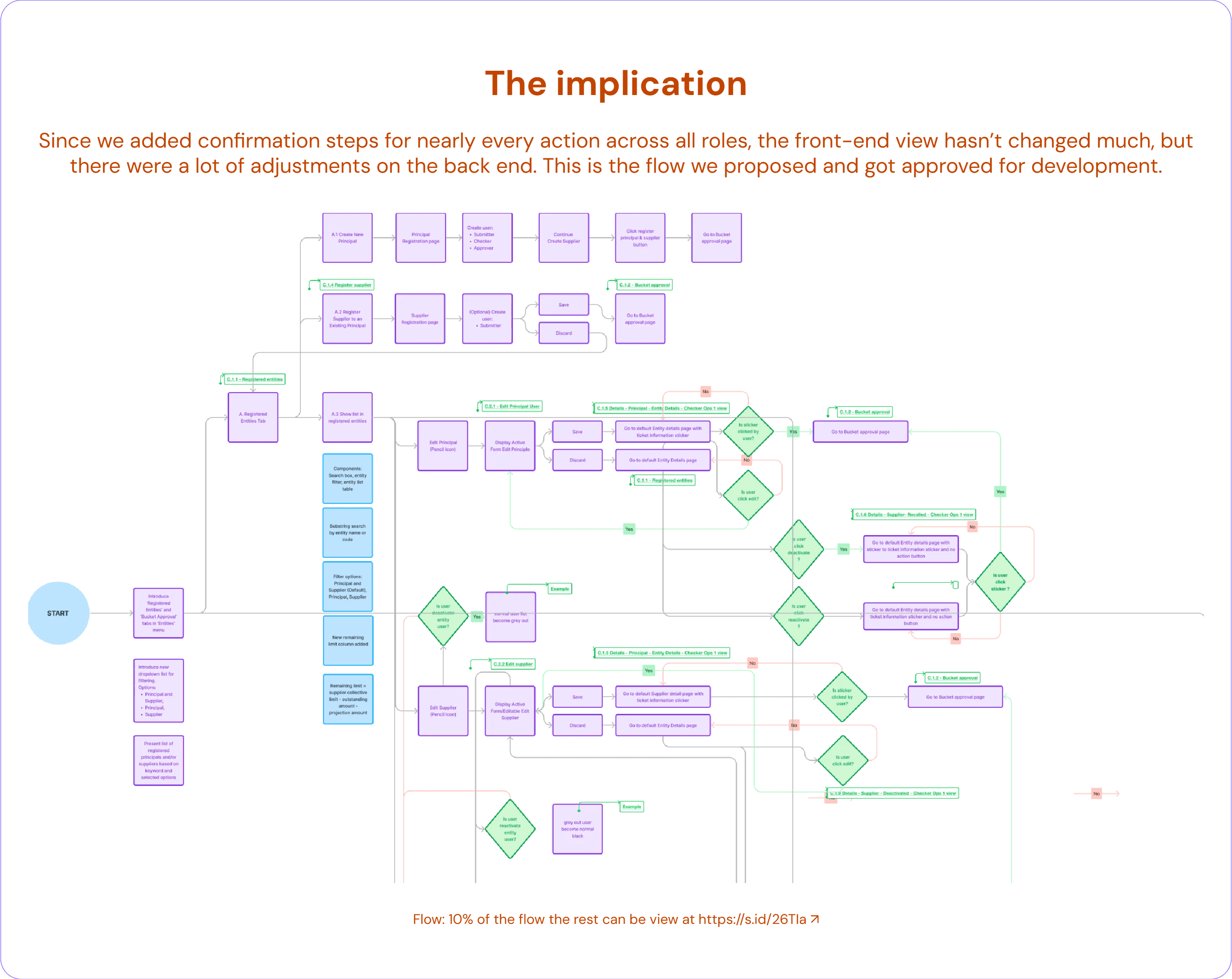
Can be view on https://s.id/26Tia
Despite the initial challenges and resource commitment required, pursuing this initiative is undoubtedly worthwhile from both a business and platform scalability perspective. From a business standpoint, the long-term benefits—such as creating new revenue streams, increasing market share, and improving operational efficiency—are projected to significantly outweigh the upfront costs. Furthermore, architecting the platform for scalability is a crucial strategic investment. It ensures we can handle future growth in user traffic, data volume, and transaction complexity without performance degradation, allowing us to seamlessly introduce new features and expand into new markets without needing to re-engineer our core systems.
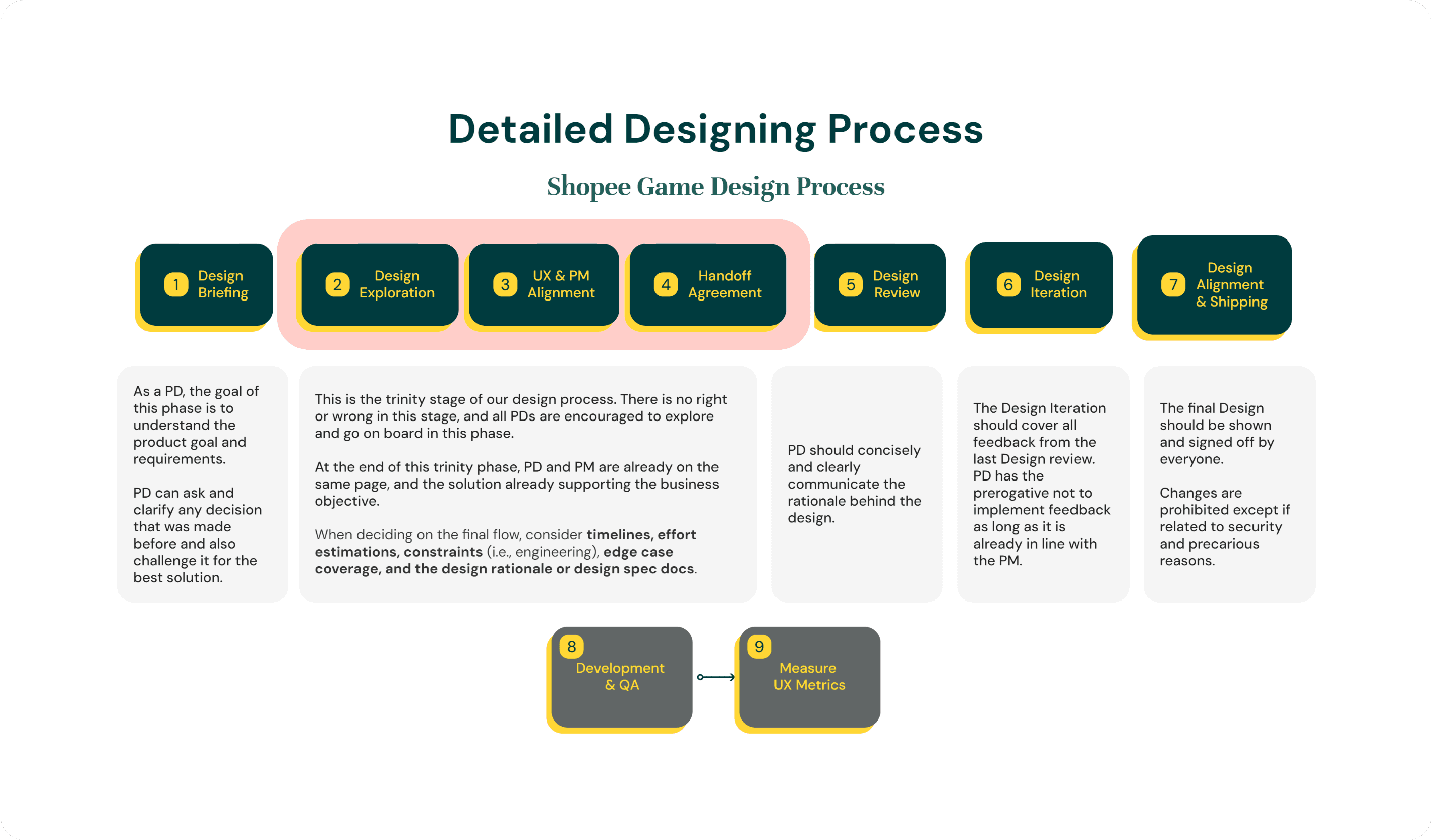
Our Typical Design Process
FINDINGS, REFLECTIONS & CONCLUSIONS
Merits is our fuel
This version is v.2.0.0. I was also part of v.1.0.0 back in Q4 2023. When people see the value in what they're doing and feel it’s making a difference, it keeps the product, engineering team, and everyone involved motivated and inspired. That’s the fuel that keeps us going.
Not ideal working process
This project is still in development, and the process has been pretty rough due to the usual challenges. There are many internal and external factors at play. As designers, it's important to know when to stand by our arguments and when to let them go, keeping in mind that the goal isn’t about our ego but delivering impactful results.
Pick your battles wisely
You can challenge anything as long as it makes sense, but when you come across unreasonable ideas, remember that your focus should be on doing what's best for the users, not just pleasing stakeholders or taking the easy route. Pick your battles wisely, and only fight for the ones that truly matter.
Banking is serious business
One thing I’ve learned is to always overcommunicate with your PM, local PM, and business PM. Banking is a heavily regulated industry, so it’s crucial that everyone is aware of any changes you make. There's a chance that even small changes could impact the rules.